


Ferrylight is the fictional travel journal of Tilda Brennick about slow journeys along European coasts by train, ferry, bike and on foot, with a small shop. It runs on Leitvia Pro and WooCommerce 11.2.1 with the theme Leitvia, a token set of its own and illustrations drawn for it, set up with the recipe Blog of Leitvia Studio.
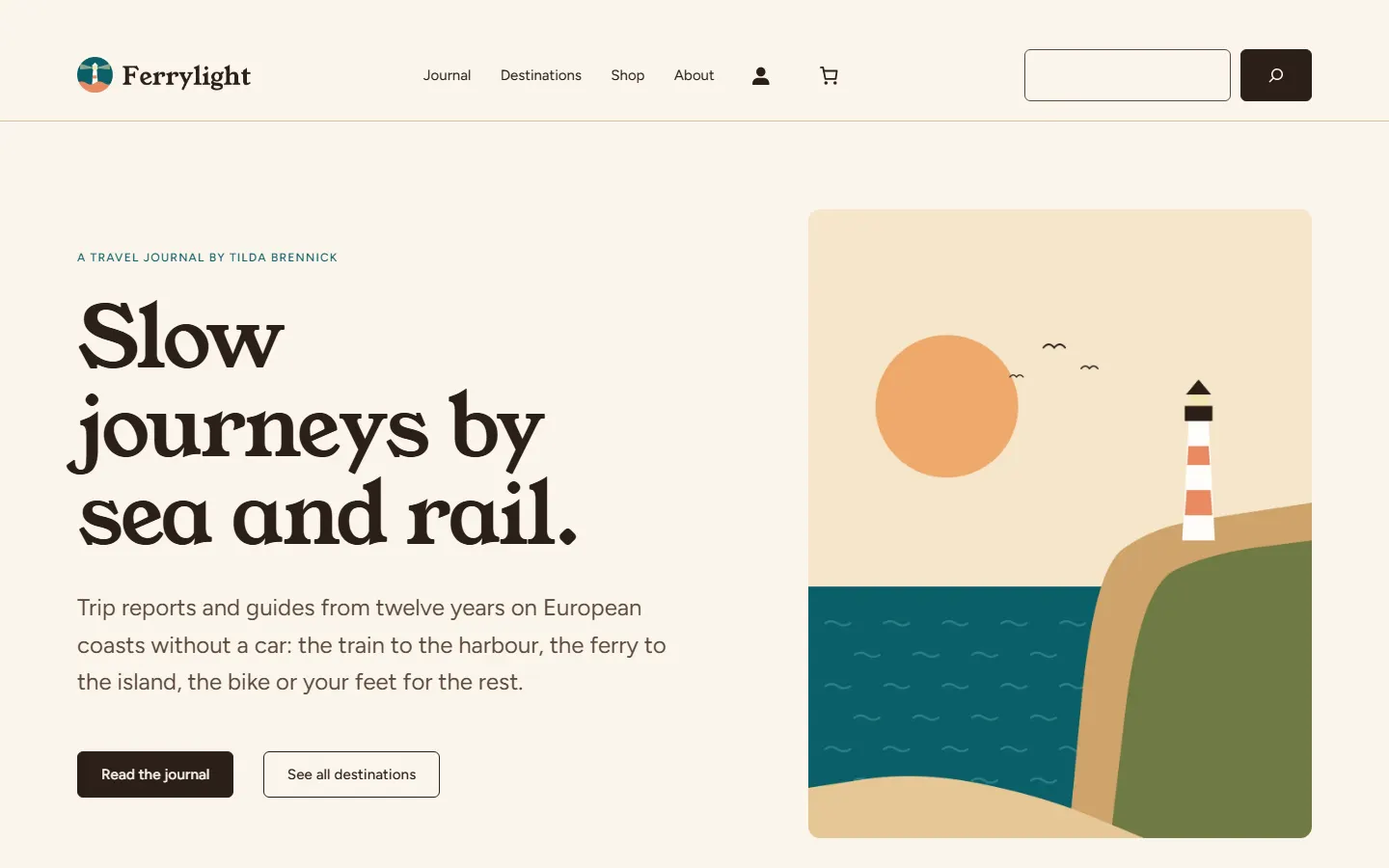
What the demo shows
- Five posts in four regions: trip reports that open with the route block of Leitvia Pro, with stages by train, bus, ferry and bike, a sketch of the route and each stage linked to its section
- Long guides with a fact box at the top, a table of contents that follows the reader as a chapter button, and the tip of the author as a synced pattern with its own text in every place
- Scroll galleries in posts and on every product page: the pictures scroll by while the box with the facts or the buy button stays in view
- A content type for the 19 places of the journal, kept in one entry each and shown on a data map that loads from OpenStreetMap only after consent, with a list that works without it
- A shop of five products, three with variations as swatch tiles, a sticky buy bar on phones, reviews and upsells; the checkout ends at the order confirmation without real payment
- A newsletter sign-up that sends the address from the server to the list after the visitor ticks the consent, and no request to another host before that
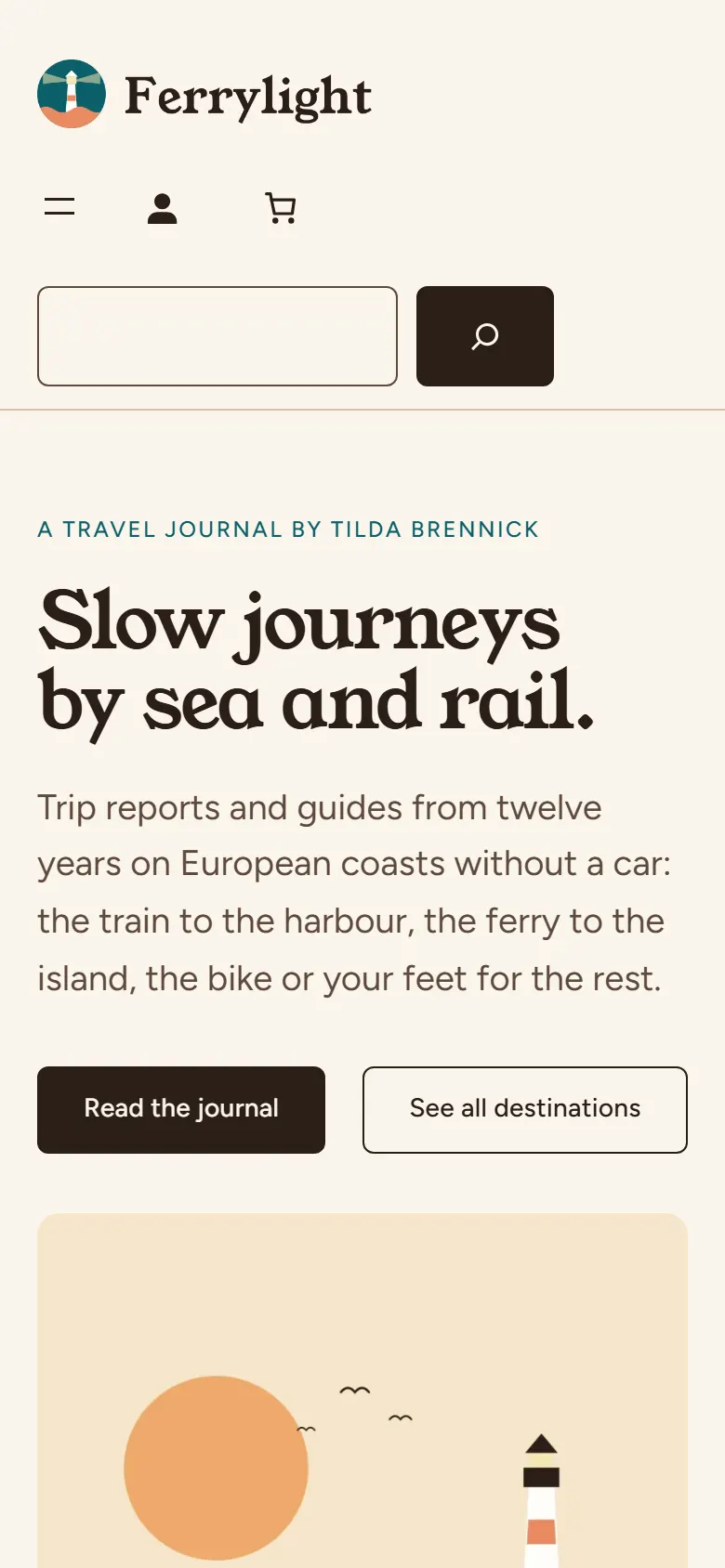
Patterns and blocks
Shop header with search, account and mini cart, a split hero with an illustration, the journal as an editorial grid, the route teaser of Leitvia Pro, a photo collage of the author, a night ferry as image break, new products, a newsletter on a tinted band, icon tiles for the regions, a timeline of the journeys behind the journal and the post end of the theme with author box and related posts.
Blocks: Route, Scroll gallery, Data map, Newsletter, Swatches and Sticky buy bar of Leitvia Pro; Table of contents, Timeline and Icon of Leitvia Studio; cart, checkout and product blocks come from WooCommerce. The product page is the template pattern Product with scroll gallery, set through the ability leitvia/update-template.
The demo grew out of the relaunch of a real travel blog with a shop. Every gap found there went into the product as a pattern, a block or a rule for AI agents, so any site can use it; the demo shares none of its names, texts or pictures.
Facts
- Brand: Ferrylight (fictional), with Young Serif and Figtree on warm sand, driftwood brown and harbour teal, plus coral, sea glass and straw for cards
- Kind of site: travel blog of one author with a small WooCommerce shop
- Built with: the recipe Blog, a token set, a content type for places and the shop on WooCommerce
- Plan: Leitvia Pro for route, scroll gallery, data map, newsletter, swatches and buy bar; theme, Studio and WooCommerce are free
- Live demo: demo.leitvia.com/travel-blog/
Build a site like Ferrylight
Set it up on your own site in four steps:
- Install the theme, Leitvia Studio, Leitvia Pro and WooCommerce.
- Apply the recipe Blog and create a token set for your brand with the skill leitvia-design.
- Write your trip reports with the route block at the top and your long guides with a fact box, a table of contents and your own author tip; keep places in a content type and show them on the data map.
- Set the product page with the template pattern Product with scroll gallery and add your products.
wp plugin install woocommerce --activate
wp leitvia recipe apply leitvia/blog --user=adminAI agents build the same with the skills leitvia-page and leitvia-shop: the route, the scroll gallery and the data map are in the block catalog they read, and the product page is one call of leitvia/update-template.
More demos
- The Lindenfeld Courier: A regional newspaper
- Northfold: A WooCommerce shop
- Wrenfield Review: A magazine
- All thirteen demos